Rotational Molding Capabilities for Custom Projects

What makes rotational molding ideal for custom projects?
Rotational molding, or rotomolding, is a manufacturing process that allows for the production of highly durable, hollow plastic parts in virtually any shape or size. According to industry reports, over 65% of manufacturers adopting custom plastic solutions are leveraging rotational molding for its ability to produce uniform wall thicknesses, complex geometries, and large-scale parts without the need for high-pressure equipment. The versatility of Rotational Molding makes it particularly suited for applications ranging from industrial tanks to specialized enclosures and custom consumer products.

How does the process support customization?
Customization is at the heart of rotational molding. Unlike other molding techniques, rotomolding does not rely on high-pressure injection, which can limit design possibilities. This allows designers to create intricate features such as ribs, threads, and undercuts without additional assembly. A recent survey indicates that companies producing tailored solutions saw a 40% reduction in post-production assembly costs due to the ability to mold parts in a single, seamless process.

What materials are commonly used in custom rotational molding?
Polyethylene remains the most widely used material for custom rotational molding due to its strength, chemical resistance, and flexibility. However, advancements in polymer technology have introduced specialty materials such as reinforced polyethylene, polypropylene, and nylon blends, expanding the possibilities for high-performance applications. Material selection is critical: industry data shows that using the right polymer can enhance durability by up to 50%, particularly for outdoor or industrial environments.

What industries benefit most from custom rotational molding?
Custom rotomolding is increasingly utilized across sectors such as industrial manufacturing, agriculture, automotive, and recreational products. For example, the agricultural sector uses custom rotomolded tanks for chemical storage, while the automotive industry applies it for durable interior components. Statistics reveal that the demand for rotationally molded products in industrial and commercial applications has grown by 12% year-over-year, highlighting the process’s adaptability to unique project requirements.

How do technological advancements impact rotational molding capabilities?
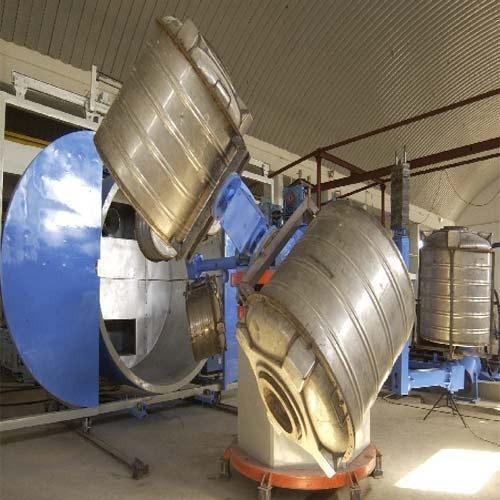
Innovation in mold design, computer-aided simulation, and automated production systems has significantly improved efficiency and precision. Modern rotational molding equipment allows for multi-axis rotation, enabling uniform heating and cooling of complex parts. Data from recent studies suggest that advanced tooling reduces material waste by approximately 15% while increasing production accuracy, making it an environmentally and economically efficient choice for custom projects.

Why are businesses increasingly adopting rotational molding for custom projects?
The combination of design flexibility, material versatility, and cost-efficiency drives adoption. Businesses can produce unique parts quickly, reduce secondary assembly needs, and meet strict performance standards. Market analysis predicts that the global rotational molding market for custom applications will continue to expand, with projected growth exceeding 6% annually over the next five years, underscoring its strategic value in product innovation.

Conclusion
Rotational molding offers unmatched capabilities for custom projects, delivering durable, complex, and efficient solutions across industries. As materials and technology continue to evolve, businesses can leverage these advantages to create innovative, high-quality products that meet the specific needs of their markets.

Ensuring Precision and Consistency with Plastics Rotomolding

Sustainability isn’t an option; it’s a necessity. With market sectors ever more dedicated to reducing the and also carbon foot print, developing methods will be improving to format having environmentally-conscious goals. One process producing dunes throughout lasting producing is Plastics Rotomolding .

What on earth is Plastics Rotomolding ?

Plastics Rotomolding , and also rotational molding , is a developing practice applied to produce worthless, seamless merchandise by heat and turning plastic supplies in a very mold. Although the method has recently been commonly used around a variety of industrial sectors for many years, their purpose to advertise sustainability possesses gained substantial attention.

Essential Benefits of Plastics Rotomolding throughout Sustainability

1. Useful Materials Practice

Rotomolding stands out to its productive utilization of materials. Unlike some other producing techniques, this process lessens spend, when natural plastic material powder snow is employed just seeing that required. Moreover, surplus substance is frequently used again, cutting down landfill donations and improving fabric efficiency.

2. Sturdy and also Long-Lasting Products

Products made by means of rotomolding are known for their robustness plus durability. More time product or service lifespans necessarily mean a lesser number of substitutions, a lesser amount of throw away, plus reduced need for natural fabric production. This specific leads to to a more sale paper, lasting economy.

3. Energy-Efficient Course of action

Contrary to a number of energy-intensive producing strategies, rotomolding runs from reduce pressure and utilizes much less energy. The following environmentally-friendly strategy cuts down carbon dioxide emissions and optimizes electrical power practice all over industries.

4. Design and style Mobility to be able to Cut down Waste materials

Rotomolding delivers unmatched design and style variety, making it possible for manufacturers to generate elaborate, multi-functional goods within a piece. This particular lessens the requirement for extra pieces and also minimizes reference employ, permitting greener layouts having much less waste.

5. Potential for Biodegradable and Recyclable Supplies

The actual advancement on the plastics business consists of new developments within recyclable plus biodegradable fresh materials. When joined with rotomolding , all these progress assist producers align together with sustainability desired goals, featuring eco-conscious alternatives for solution development.

Rotomolding : The Step To Environmentally friendly Making

Plastics rotomolding exemplifies precisely how modern creation routines can certainly give rise to sustainability. With successful materials employ, energy price savings, and sturdy item designs, this process is constantly pave the way pertaining to an even more eco friendly potential inside manufacturing.

Cost Reduction in Plastic Manufacturing with Plastics Rotomolding

In the joy of Plastics Rotomolding , accomplishing the two longevity and also seamlessness in the element might be a tough feat. Nonetheless, rotomolding (rotational molding) stands apart when the single most helpful processes to develop solid, easy cheap components. This specific flexible technique is widespread around industries—from auto to help client goods—on account of its ability to produce significant, elaborate, and sturdy components which satisfy thorough efficiency standards.

1. Smooth Style intended for Power plus Reliability

One of the first benefits of rotomolding is its ability to generate smooth plastic material parts. Unlike injection molding as well as hit molding , which in turn call for a number of pieces or maybe extra assembly methods to generate huge elements, rotomolding makes it possible for suppliers to generate a single, continual piece. The following easy design and style removes the requirement for important joints, joins, or maybe nails, which may be vulnerable issues within a product. It makes sense an important part that has higher architectural honesty and higher capacity stress in addition to wear.
2. Longevity within Harsh Environments

Plastics Rotomolding developed by means of rotomolding are known for their extraordinary durability. The types of materials used, for instance high-density polyethylene (HDPE) as well as polypropylene, are generally well-suited to get withstanding affect, UV exposure, in addition to chemical exposure. Because rotomolded areas in many cases are employed in backyard or even manufacturing environments—like holding tanks, canisters, as well as recreation space equipment—the ability to go through hard conditions will be crucial. This homogeneous depth accomplished in rotomolding makes sure dependable strength through the entire total part, bettering its capability to fight deformation and damage.

3. Pattern Freedom with Complicated Geometries

Rotomolding exceeds expectation with producing areas along with sophisticated geometries. Regardless of whether it’s an extra-large reservoir, intricate form, or possibly a custom pattern, accomplishing this are designed for a wide variety of forms. A chance to deliver complex, worthless areas along with small constraints would make rotomolding a well known option for corporations shopping to produce designed items which keep each cosmetic attractiveness and practical strength.
Final result

Plastics rotomolding is usually the key to creating long lasting, effortless parts which accomplish easily below challenging conditions. Being able to generate elaborate types, lower spend, and provide high-quality, long-lasting solutions will make it a great option for producers all around several sectors. Pertaining to corporations shopping to blend functionality, overall flexibility, and cost-efficiency inside their cheap pieces, rotomolding delivers a very good solution.